
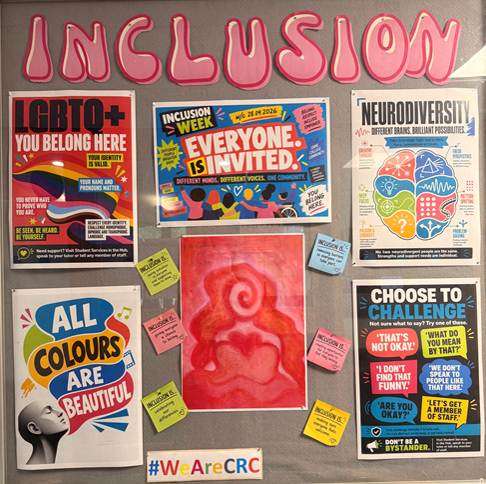
 " alt="National Inclusion Week: What Inclusion Means to Us in Creative Industries">
1 October 2026
National Inclusion Week: What Inclusion Means to Us in Creative Industries
READ MOREAt CRC, we offer Access to Higher Education Diplomas – a one year course that helps students to develop the study skills and academic knowledge to progress onto a degree level course. People who typically join Access courses may have been out of education for a while or haven’t achieved the ‘right’ grades at A Level to study the course they wanted to. Around 40,000 people every year study on an Access course and there is no upper age limit. The courses are part-time and flexible, to fit in with work and childcare.
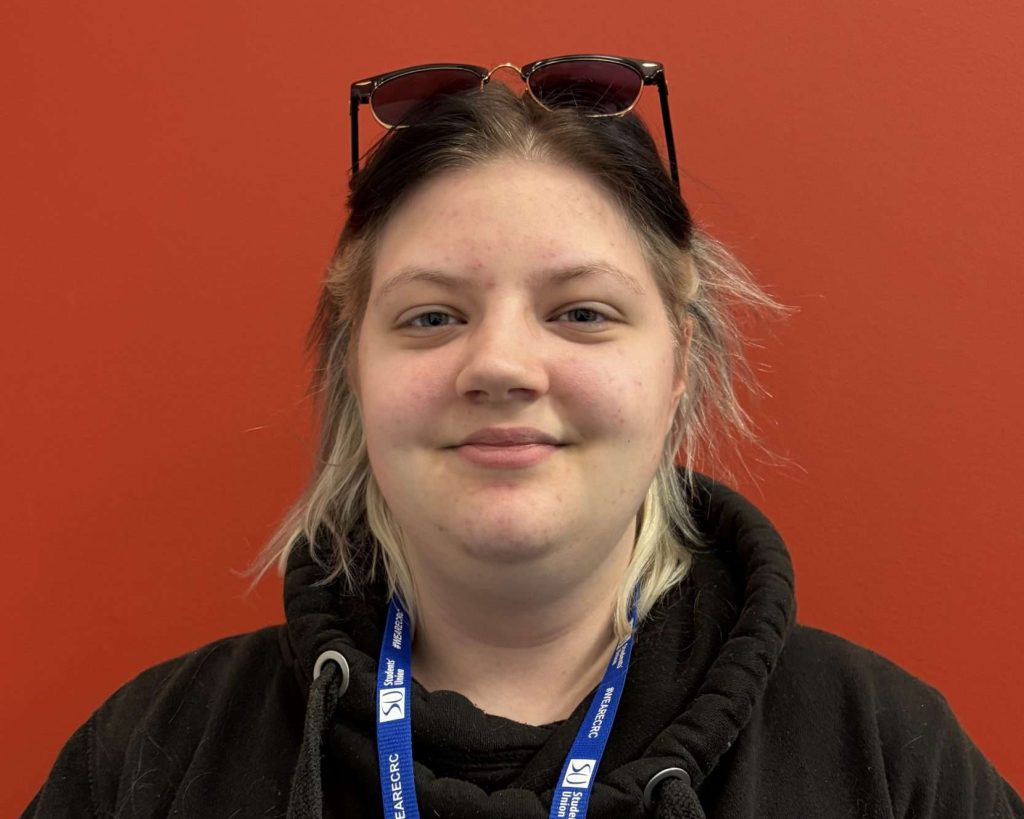
Last year I was doing an animal care course at College of West Anglia, and I decided I really didn’t want to do that. The only reason I was there was because I dropped out of a private school at around the start of year 10, due to a lot of medical and mental health issues. I got off-track for a while, did a bit of home school, wound up in animal care somehow – because my mum runs a wildlife rescue centre. Then I basically said I want to do something I enjoy and I wanted to do creative writing. I needed to find a way to get myself into university, preferably after doing a year of extra study. I came across the course here – I don’t exactly remember how I found out about it, but I did and I got in. So basically, it was a lucky break.
And honestly, I didn’t think I’d enjoy it here so much, but I surprisingly do. Mostly because I was so focused on wanting to do creative writing and nothing else, so when I realised I had to do sociology and history (as part of the course) I was like ok fine, but I was never a big fan of history, mostly because we always did the same parts of British history. Learning about different parts of history here is super interesting. Currently we’re doing Russia which is completely new content for me and inherently interesting. It helps that Ian, our teacher, is very charismatic and just an awesome character in general. He wears a cowboy hat and he brings stuff in – he brought in little wax tablets when we were doing Roman Britain, or coins from the Russian era, so that really helps.
And sociology – I’d never heard of it before I came here, hadn’t a clue what it was. It’s really interesting, it’s about people, and the way people work in a society, and that’s always been something that interested me in general, so getting to learn about it in an academic setting has been so interesting. If you have the opportunity to take a class in sociology, I would say take it. It’s very enlightening and helps formulate how you see the world, in an analytical way.
From what I remember, there was a former student who did the criminology course here, and she told me about Debbie (Goodrick – Sociology Lecturer) specifically, as she also did sociology. She was like ‘I know about a lot of your needs, and you’re worried about getting back into education’ because I’m not very good mobility wise so I was trying to look for somewhere really accommodating. And she said CRC had been really accommodating with her as she’d been raising a child in nursery while she was attending. She had glowing praise for Debbie, and when I came here and met Debbie she was just so welcoming, and accepting, and so ready to be like ‘ok I’m ready to meet you in the middle’ which was just fantastic. I wasn’t expecting it. I haven’t been fully supported in a lot of other schools, with my mobility issues or the autism and ADHD or anything, so it was such a pleasant surprise to come here and have so much support readily available for me. Having my teachers be so engaging and ready to talk to me about what I need. So that’s one of the biggest reasons why I’m here.
I really enjoy it. I think I’m quite lucky because everyone in the class has kind of gone off track with their education or they’re redoing it, so we all have that in common already – that the education system in some way or another has not worked out. Being in a room with people who understand that is so comforting in a way, and we’ve really all bonded together in a way that I never expected to have with classmates or peers. I’ve met a lot of people of all ages, I know some people are in their twenties, some people are my age, some people are older, and we can all talk to each other as peers and I don’t get looked down on just because I’m one of the youngest, which is awesome. It’s like everyone has insightful ideas and we have a lot of debates, especially in English class, about the literature we’re talking about, or about theology in sociology class. The teachers allow and encourage that sort of discussion between us because it helps us grow and nurture our own thoughts and ideas which is so interesting and enjoyable, I love hearing what people have to say and either challenging it or agreeing with it or adding to it in some way. It’s honestly super interesting.
I want to go to university and do creative writing. Specifically, I want to go to UEA which I believe CRC has connections with, they also have connections with ARU which is another choice of mine. But I really want to go to UEA because they also have similar accommodations and they’re in Norwich, the heart of creative writing. So, I’m basically going to be working as hard as I can here to get the grades to go to UEA.
It means I can do what I want to do. It’s so hard to describe… for such a long time I was doing what I thought I had to do in order to get a job, make money, support myself. And then my life got turned upside down. But this course, it means I get to choose what I want to do. At the end of the day, if it doesn’t make me rich, it’ll make me happy. Being able to have that choice, to make that choice in an informed way, being able to go to university, and for a while I didn’t think I’d be able to, but now I plan to and that’s really exciting.
You will definitely be accommodated but you won’t be coddled. The teachers will be able to help you if you ask for it, however you won’t be able to get away with not doing the work, or not working hard. You must work hard and show that you want to be here. Because I feel like some people might interpret the Access course as easy – it’s not easy! It’s 3 A Levels squished into one year, and it’s tough and intense but it’s also really fun. So, understand that while you will be supported, they’re not going to hold your hand the whole way through.
I only had one worry and that was about the stairs. I have limited mobility and I emailed Debbie about it, and she was like ‘oh I can get you a lift pass.’ That was my only worry, and it was solved immediately. It set an amazing precedent for me. I can just talk to people, and it will be sorted. It immediately opened a massive line of communication, like if there are any problems, I can just say something. So that was really sweet.
I really enjoy my time here. The Access courses do exist and they are awesome! That’s all I want to say!
Thank you to Atticus for speaking to us about his experience of studying on the Access course. If you’d like to find out more information about Access to HE, click here.


 " alt="Cambridge Regional College Opens £150k Hospital Simulation Ward to Train Next Generation of Frontline NHS Workers ">
 " alt="Cambridge Regional College to Deliver New Lifelong Learning Entitlement Funded Courses from January 2027">